Budget Matters Blog

Entries By Becky Sweger

American Community Survey Under Attack

Update 5/14/2012: The Senate is expected to consider its own version of the Department of Commerce/Census Bureau budget as early as Tuesday of this week. If you oppose the elimination of the American Community Survey, please contact your Senators and urge them to support the ACS.

5/10/2012: Today the House of Representatives passed H.R. 5326, the appropriations bill for the Departments of Commerce and Justice, NASA, and other related agencies.

H.R. 5326 includes an amendment that would prohibit the Department of Commerce from funding the American Community Survey (ACS), a yearly household survey ...


Why We Need the DATA Act

Debates about the federal budget rage on in Washington. Unfortunately, those debates are based on guesstimates rather than accurate information. That’s because there is no single, comprehensive source for federal spending data, as I wrote in a blog post earlier this week.

Federal spending transparency is not a partisan matter, and it’s not a luxury. It’s an urgent issue. What we need now is the will to make it happen.

NPP supports the DATA Act, which recently passed the House, and we’d like your help to make sure it comes up for a vote in the ...


You Ask, We Don't Answer: How Much Money Does the Federal Government Spend?

Authority, Outlays, and Obligations: oh my!

We’ve been talking about the DATA Act this week because it represents an opportunity to improve our insight into how the U.S. federal government spends money. Tracking precise amounts of federal spending is tricky, but it’s critical to having an informed discussion about the budget.

“Federal spending” can mean different things. When Congress and the president pass a budget, they’re granting budget authority to federal agencies, which gives them the legal authority to spend money.

Once the agencies have budget authority, they enter into obligations, which essentially set money aside ...


Pie Week: Spending Pies United

During Pie Week, we’ve explored three types of federal spending pies: total, mandatory, and discretionary. Judging from your comments on our Facebook page, you have strong opinions about the numbers on these charts.

To wrap up the week, we think it’s important to see the spending charts next to one another and understand the relationships between them. Below is an experimental way to make these charts more interactive. Just hover over the pie slices and click them to see the detailed data.

Educational? Confusing? Leave a comment and let us know what you think.

<a href ...


Pie Week Continues: Mandatory Spending

For the second day of Pie Week, we present the mandatory spending pie. Mandatory spending is part of total federal spending, which we explored in yesterday's total federal spending pie.


Spending for mandatory programs is not determined by lawmakers during their yearly process for passing the federal budget. Instead, mandatory programs like food stamps and Medicare have certain eligibility criteria; anyone who meets them receives benefits from the program. Want to know more about mandatory spending? Check out Federal Budget 101. And visit the Budget Matters blog again tomorrow, when we'll have another pie for your enjoyment.


Environmental Data in the Federal Priorities Database

In honor of Earth Day this past Sunday, NPP’s focus this week is on the environment.

The Federal Priorities Database—our collection of spending and indicators compiled into one easy-to-use, free search tool--has several data collections related to energy and the environment. 

The data below have the latest available information about your state:

Alternative Fuel Vehicles: the estimated number of alternative fuel vehicles in use, 2003-2009

Electric Emissions: emissions generated by electricity plants, 1990-2010

Energy Consumption by Source: total energy consumption from fossil fuels, nuclear electric, and renewable sources, 1990-2009

Energy Consumption Per Person: total energy consumption per person ...


Data Wednesday: The Complete Archives

In the last few months, Data Wednesday has covered all of the basics you need to know when using our Federal Priorities Database.

We’ve covered so much ground, in fact, that it’s time for Data Wednesday to go on a hiatus. However, NPP would be more than happy to entertain specific database questions in our new You Ask, We Answer blog feature.

Below is a complete list of the topics we’ve covered in Data Wednesday. Thanks for reading, and be sure to get in touch if there’s something else you’d like to know.

Searching the ...


Data Wednesday: Normalization Wrap-Up

This is the latest entry in NPP’s weekly Data Wednesday series, a getting-started guide to NPP’s Federal Priorities Database. All previous posts are archived here.

Back in February, we introduced data normalization. The bottom line: it’s hard to compare data across time and geographies accurately unless that data is normalized. In general, normalizing involves dividing “raw” data by a meaningful denominator. The unemployment rate, for example, is calculated by taking the total number of unemployed and dividing it by the number of people in the labor force.

The Federal Priorities Database presents normalized data whenever possible. A ...


Data Wednesday: Per Capita

This is the latest entry in NPP’s weekly Data Wednesday series, a getting-started guide to NPP’s Federal Priorities Database. All previous posts are archived here.

Two weeks ago, Data Wednesday used percentages to introduce normalization. This week’s post takes a look at per capita, another type of normalization.

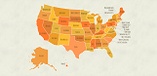
As an example, consider this map of FY 2010 Supplemental Nutrition Assistance Program (food stamp) spending.

Using the map’s legend, you can quickly see that California and Texas got the most funding. Not surprising, since those states have the most people.

We can better compare food stamp spending ...


Data Wednesday: Normalizing

This is the latest entry in NPP’s weekly Data Wednesday series, a getting-started guide to NPP’s Federal Priorities Database.  All previous posts are archived here.

When looking at data, you may hear or read the phrase normalization. Simply put, normalization is transforming a set of data so that they may be compared in a meaningful way. Still sounds geeky? Although you may not realize it, you use normalized data all the time.

A common example is unemployment numbers. Knowing the total number of unemployed people in an area is interesting, but it isn’t enough information to compare ...


Page 1 of 3 1 2 3 »