Budget Matters Blog

Transparency & Data

American Community Survey Under Attack

Update 5/14/2012: The Senate is expected to consider its own version of the Department of Commerce/Census Bureau budget as early as Tuesday of this week. If you oppose the elimination of the American Community Survey, please contact your Senators and urge them to support the ACS.

5/10/2012: Today the House of Representatives passed H.R. 5326, the appropriations bill for the Departments of Commerce and Justice, NASA, and other related agencies.

H.R. 5326 includes an amendment that would prohibit the Department of Commerce from funding the American Community Survey (ACS), a yearly household survey ...


Why We Need the DATA Act

Debates about the federal budget rage on in Washington. Unfortunately, those debates are based on guesstimates rather than accurate information. That’s because there is no single, comprehensive source for federal spending data, as I wrote in a blog post earlier this week.

Federal spending transparency is not a partisan matter, and it’s not a luxury. It’s an urgent issue. What we need now is the will to make it happen.

NPP supports the DATA Act, which recently passed the House, and we’d like your help to make sure it comes up for a vote in the ...


You Ask, We Don't Answer: How Much Money Does the Federal Government Spend?

Authority, Outlays, and Obligations: oh my!

We’ve been talking about the DATA Act this week because it represents an opportunity to improve our insight into how the U.S. federal government spends money. Tracking precise amounts of federal spending is tricky, but it’s critical to having an informed discussion about the budget.

“Federal spending” can mean different things. When Congress and the president pass a budget, they’re granting budget authority to federal agencies, which gives them the legal authority to spend money.

Once the agencies have budget authority, they enter into obligations, which essentially set money aside ...


You Ask, We Answer: Why Doesn't the Government Publish These Numbers?

A few weeks ago I was on the radio program Background Briefing with host Ian Masters. We were talking about National Priorities Project's Tax Day numbers, which show you how the federal government spent every penny of your income taxes in 2011.

"One sort of wishes the federal government provided these numbers," my host lamented.

In fact, the White House used to put out a Citizen's Guide to the Federal Budget every year, but it was discontinued during the George W. Bush presidency. President Obama has not resurrected the practice. Meanwhile, valuable information about how the federal government ...


Environmental Data in the Federal Priorities Database

In honor of Earth Day this past Sunday, NPP’s focus this week is on the environment.

The Federal Priorities Database—our collection of spending and indicators compiled into one easy-to-use, free search tool--has several data collections related to energy and the environment. 

The data below have the latest available information about your state:

Alternative Fuel Vehicles: the estimated number of alternative fuel vehicles in use, 2003-2009

Electric Emissions: emissions generated by electricity plants, 1990-2010

Energy Consumption by Source: total energy consumption from fossil fuels, nuclear electric, and renewable sources, 1990-2009

Energy Consumption Per Person: total energy consumption per person ...


You Ask, We Answer: Why Are There Different Versions of the Budget?

Rebecca from Lititz, Pennsylvania, asked: Why are there different versions of the budget, and who decides which one becomes the actual budget for the federal government?

It’s a good question. You might have read in the news recently about the House budget introduced by Rep. Paul Ryan. And back in February, you might have heard about President Obama’s new budget. So, how do these different proposals turn into a single federal budget?


President Obama's budget, released back in February, was a proposal for Congress to consider. And the recent House budget was a budget resolution. A budget ...


Tax Day 2012 – Those Pennies Add Up

It's tax week here at National Priorities Project. You might have seen our Tax Day numbers, or watched our Tax Day video on YouTube, or gotten your personalized tax receipt. If you did, you saw that 27 cents of every 2011 federal income tax dollar went to the military, while 21.4 cents went to health programs, 14.5 cents paid interest on the federal debt, and two cents went to education.

<


That's not all. The fractions of a penny matter, too.

For every federal income-tax dollar you pay, 0.23 cents goes to energy conservation.

0.59 ...


Data Wednesday: Normalization Wrap-Up

This is the latest entry in NPP’s weekly Data Wednesday series, a getting-started guide to NPP’s Federal Priorities Database. All previous posts are archived here.

Back in February, we introduced data normalization. The bottom line: it’s hard to compare data across time and geographies accurately unless that data is normalized. In general, normalizing involves dividing “raw” data by a meaningful denominator. The unemployment rate, for example, is calculated by taking the total number of unemployed and dividing it by the number of people in the labor force.

The Federal Priorities Database presents normalized data whenever possible. A ...


Data Wednesday: Per Capita

This is the latest entry in NPP’s weekly Data Wednesday series, a getting-started guide to NPP’s Federal Priorities Database. All previous posts are archived here.

Two weeks ago, Data Wednesday used percentages to introduce normalization. This week’s post takes a look at per capita, another type of normalization.

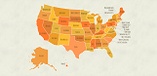
As an example, consider this map of FY 2010 Supplemental Nutrition Assistance Program (food stamp) spending.

Using the map’s legend, you can quickly see that California and Texas got the most funding. Not surprising, since those states have the most people.

We can better compare food stamp spending ...


Data Wednesday: Normalizing

This is the latest entry in NPP’s weekly Data Wednesday series, a getting-started guide to NPP’s Federal Priorities Database.  All previous posts are archived here.

When looking at data, you may hear or read the phrase normalization. Simply put, normalization is transforming a set of data so that they may be compared in a meaningful way. Still sounds geeky? Although you may not realize it, you use normalized data all the time.

A common example is unemployment numbers. Knowing the total number of unemployed people in an area is interesting, but it isn’t enough information to compare ...


Page 1 of 4 1 2 3 4 »